

People living with disabilities across Australia are utilizing Smart Home Devices. These devices help them live independently. From voice-activated and accessibility tools to video monitoring systems, technology is transforming what it means to live independently. Many people also rely on assistive technology at some point in their lives. This often happens as people grow older, recover from an injury, or manage a health condition. Tasks that once felt simple can suddenly become difficult or even unsafe.
Smart Speakers (Google Nest/Alexa) for Scheduling and Communication
Smart speakers are among the most efficient and cost-effective smart home devices, they help increase daily independence for participants by assisting them in:
- Setting medication reminders through voice commands to avoid missed doses of medication.
- Scheduling appointments for therapy and community events to keep plans organised.
- Making hands-free phone calls, especially for those who are physically challenged.
- Monitoring lights and other appliances by simply using voice commands.
- Looking up weather and transport information for planning purposes and community participation.
- Directing entertainment through giving voice commands to manage music, audiobooks, and TV. This can be highly beneficial for people with physical challenges.
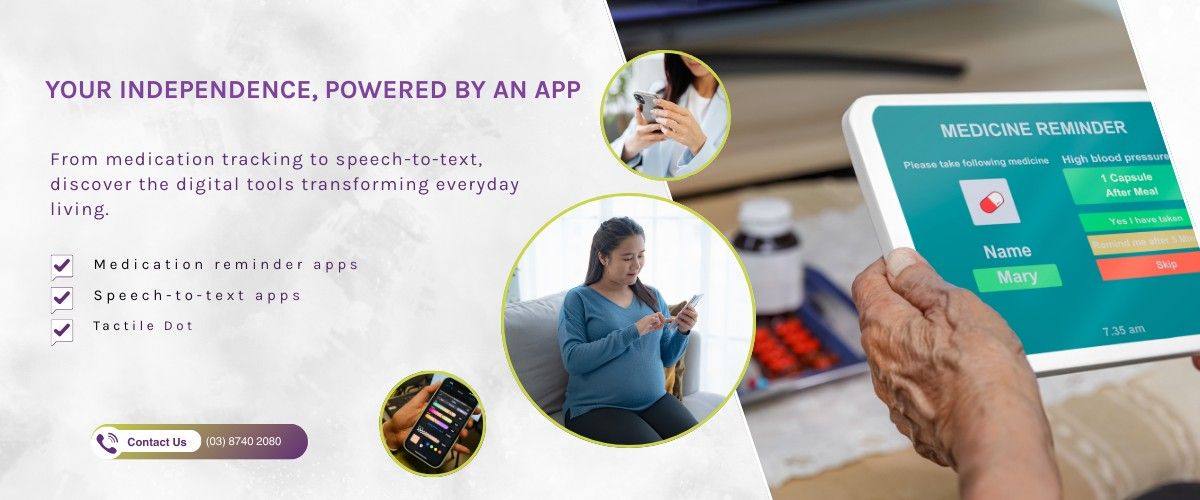
Accessibility Apps That Assist with Everyday Living
One of the most powerful forms of assistive technology for everyday life is mobile apps.
The most popular ones include:
- Medication reminder apps: These apps not only remind you of the medication intake time but also keep track of the dosages.
- Speech-to-text apps: They assist people with speech impairment to improve their communication.
- Budgeting applications: These boost financial independence.
- Emergency alert applications: These provide instant assistance when needed.
Vision Support Technology
Vision support technology helps a person with vision impairment read, move around, and use digital tools more independently.
Here are some examples:
- Screen readers
- Magnification tools
- Large-print keyboards
- Audiobooks
- Smartphone settings
A vision-impaired person can use screen readers like VoiceOver and TalkBack to read content on phones and computers. These tools also assist users in reading on their own and accessing the internet.
Smart Lighting and Power Automation
With a smart lighting system, individuals are able to turn the lights on or off using voice commands. Smart light bulbs can be set to different brightness levels or colors, and you can control them using voice commands or through a smartphone application. This is particularly useful for individuals with light sensitivities or visual impairments.
Smart lighting helps individuals prevent accidents by assisting them to move around the house safely. Smart light bulbs can be programmed to turn on automatically using motion sensors to provide illumination along pathways at night. Smart plugs are also useful for easier control of appliances.
Homes that are disability-friendly eliminate physical strains and provide safety within the house. For someone with limited mobility, being able to turn off a light without assistance helps to boost dignity and confidence.
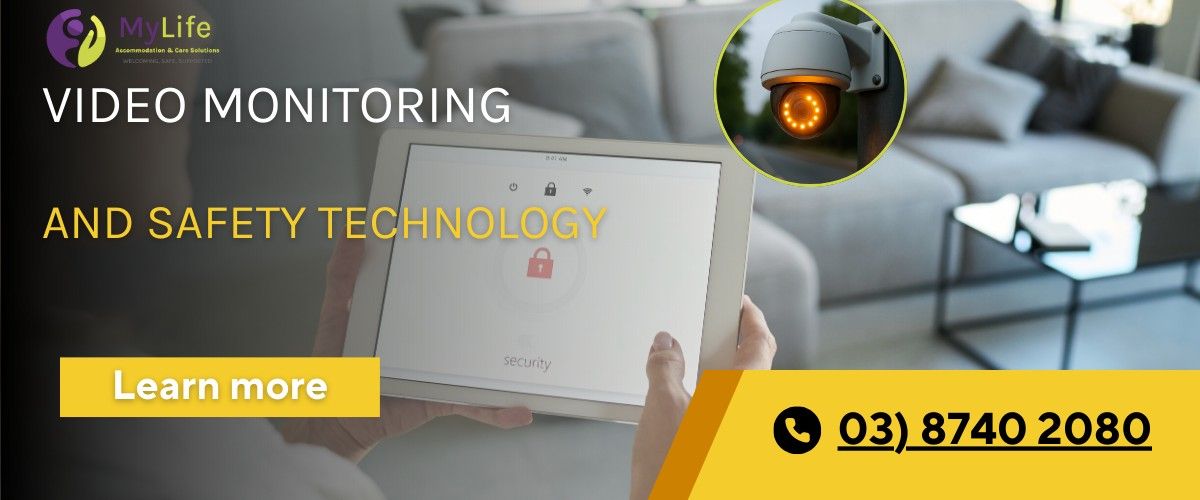
Video doorbells and other video monitoring technologies provide safety and independence to NDIS participants by allowing them to:
- View visitors at the door before answering
- Monitor visitors from a distance
- Be more aware of their safety
- Feel safe living alone
Case Study: Home Automation for a Participant
Maria is an individual living with a disability from Melbourne who has very limited upper-body mobility. She wanted to live independently in her home but found it difficult to manage everyday tasks.
Maria has installed:
- Voice-controlled smart lights
- Automated blinds
- A smart thermostat
- A video doorbell
- A medication reminder system
With the help of these assistive technology solutions, Maria was able to significantly reduce her physical dependence on others. She became more confident and even felt a sense of empowerment through having greater control over her environment. Home automation has a substantial impact in practice.
Choosing the Right & Best Smart Home Technology for People with Disability in Australia.
Before you invest in Smart Home Devices, ask yourself these questions:
- Will the device make things safer for you?
- Will the device assist you in achieving your independence goals?
- Will you need a professional to install the device?
- Funding concerns?
It is always good to talk to an occupational therapist to ensure that the tech you are looking at aligns with your NDIS and personal goals.
Conclusion
Technology is changing the way Australians with disabilities live at home. A well-thought-out selection of Smart Home Devices has the potential to increase the level of independence, reduce the need to rely fully on support workers, and make the home environment a lot safer.
Smart technology is becoming ever more convenient for Australians that require disability support. Your home must be your power base, and the right technology can help that become a reality.