

The road to independence differs at times, and not all the NDIS participants share it. I once met a mother who stated that her son could do so much without any help; he just needed someone who knew how to keep him safe. Her son had complicated health requirements that demanded professional attention on a daily basis. Nonetheless, he only needed to be free to live as any other young Australian does.
It is in this context that the High Intensity Support NDIS services prove to be life-changing. The supports assist individuals with complicated needs to have a safe and assured life. They prepare individuals who require advanced clinical care on a daily basis. This assists individuals in achieving success at home, in their neighborhood, or even in any other special residential area.
Are you an NDIS participant, a member of the family, a support coordinator, or a plan manager? Do you wish to know about High Intensity Support? Everything is simplified in this guide in a clear and friendly manner.
The High Intensity Daily Personal Activities (HIS) Definition
The NDIS Definition: Why Such Supports Demand Special Worker Training
The NDIS Quality and Safeguards Commission believes that high-intensity daily Personal Activities entail intricate health tasks. These are duties that require high levels of skills. Employees are forced to undertake more modules. They also have to cope with competency tests and have to be evaluated on skills periodically. This makes sure that their care is not dangerous or illegal.
This cannot be done by normal workers in the support department. They need:
- High-level professional knowledge
- Risk management skills
- Readiness of emergency response
- Verification by a Registered Nurse (RN) or qualified clinician
This renders High Intensity Support in NDIS to be unique. It provides more level of skill as compared to ordinary daily living assistance.
Major Citations of High Intensity Support according to NDIS Quality and Safeguards Commission
In High Intensity Support, NDIS Commission suggests several selections that consist of:
- Complex Bowel Management
- Enteral Feeding (PEG/PEJ tube feeding)
- Tracheostomy Care
- Ventilator Management
- Urinary Catheter Care
- Diabetes and Subcutaneous Injections
- Extreme Dysphagia and Mealtime Management
In each category, there exist strict regulations. It entails special equipment and talent. This helps in making sure that support is successful and safe.
Breakdown of Common Support Services of High Intensity in Detail
The knowledge about these aids helps you determine what you may require or for the other person you love
Detailed Instructions on Complex Bowel Management (CBM)
The participants need CBM when they are unable to take care of their bowels in a holistic and safe manner. It has digital stimulation, suppositories, and manual evacuation. In it, there is also bowel pattern monitoring and control over high-risk symptoms. The CBM of the workers presupposes the need to take NDIS High Intensity courses. Bowel problems should be corrected. They can lead to serious crises. The employees must also meet their competence level in such areas.
Understanding Enteral Feeding (Tube Feeding) and Support Protocols
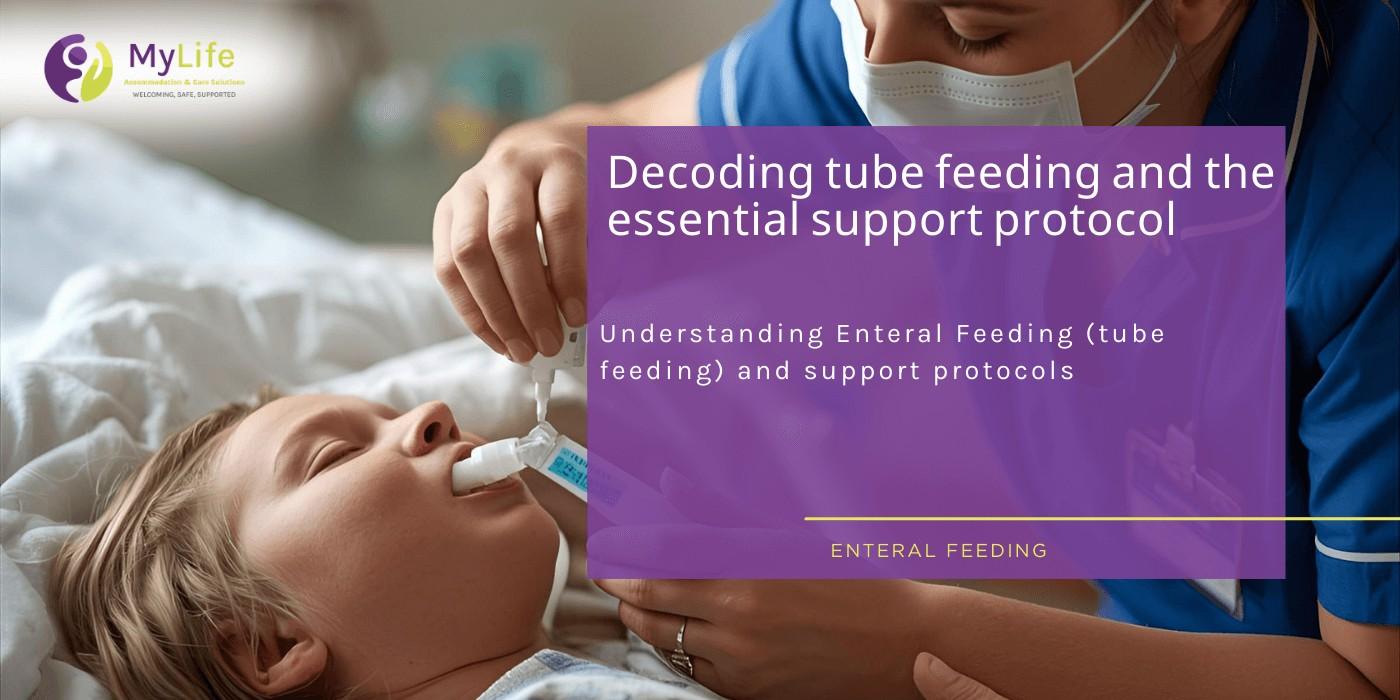
Enteral feeding serves to assist individuals to get fed by the tube, like PEG or PEJ. Activities are changing, including drawing formulas and operating feeding apparatuses. Risks of aspiration are also checked by them. They prevent infections and control the displacement of tubes.
Enteral feeding is one of the major components of NDIS. It needs high-intensity care. Wardens must have good proficiency in preventing choking. The skills are also required by them to avoid infections and other issues in the participants.
Respiratory Support: Tracheostomy Care and Ventilator Use
Tracheostomy Care
Treatment of tracheostomy includes:
- Suctioning the airway.
- Changing and cleaning tubes.
- Recognition of respiratory distress.
- Infection prevention and blockage.
Workers skilled in clinical procedures are required to take care of tracheostomy. They should also be in a position to respond fast. Wrong care may be life threatening in seconds. It is why it requires maximum NDIS assistance.
Ventilator Support
Certain participants supplement their breath with the help of ventilators. Employees should learn how to install ventilators. They ought to follow equipments alarms. They have to assist someone facing difficulty in breathing. They should have emergency measures in place.
Wrong ventilator care may be fatal. The staff who have to attend to ventilator users need a high level of training. They interact at work regularly with RNs who supervise them.
Other Multifaceted Areas: Urinary Catheter Care and Subcutaneous Injections
Urinary Catheter Care
In the case of urinary catheters, cleaning is to be done on a daily basis. Ensure that the drainage bag is not higher than the waist. Forgot to wash hands after and before handling the catheter/bag.
Subcutaneous Injections
Medications are administered beneath the skin and are placed in the fatty tissue known as subcutaneous injections. In this manner, the body can receive the medicine in a gradual manner. It is also able to work with insulin, some blood thinners, and fertility medication
Others
Other complex areas include:
- Meal preparation for severe dysphagia
- Managing seizures
- Supervising wound care
All these require additional experience to make matters safe and prevent complications.
Educational Requirement of a High Intensity Support Worker
High Intensity Support NDIS services cannot be provided only by experience. They need prepared, quantifiable abilities.
Critical NDIS Certifications and Training Requirements
A High Intensity Support Worker is required to undertake:
- National Disability Insurance Scheme, High Intensity Support Skills Descriptors
- The NDIS High Intensity Worker Module
- Individual modules of each complex area, e.g., offer enteral feeding and care of a tracheostomy.
- Annual refresher training
- Emergency response and 1st aid certification
This makes the workers possess the right knowledge, skills, and security perception to handle complex care tasks.
This would see workers have the right knowledge, skills, and safety awareness when dealing with complex care activities.
Registered Nurse (RN) In the Assessment, Delegation, and Verification of Competency
The RNs play an essential role in offering intensive care. They determine the care needs of the participant. They develop individualised care plans, train and oversee support workers as well. RNs verify the competency of workers. They also inspect the outcomes of the immediate care. High Intensity Support needs RN supervision of a worker under the NDIS.
Beyond Clinical Skills: The Importance of Incident Management and Risk Mitigation
The workers operating in the intensive support units should be highly skilled at risk assessment to prevent injury. They should be able to detect the symptoms of medical health problems. They must write down the incidents in an explicit way. They are also expected to treat them well. They should apply manual handling methods in order to minimize the chances of getting an injury. They should also manage the infections in order to ensure that the environment is clean. These competencies are relevant in the NDIS support in the area of safety as well as quality.
Accessing and Funding High Intensity Support in the NDIS
How HIS is Typically Funded Through the Core Support Budget
High intensity supports refer to those provided by core supports and intended to assist everybody with living. The amount of funding is dependent on four major factors:
- The functional capacity of the participant
- Clinical assessments
- Feedback of health professionals
- Risk factors
Such supports require special treatment. This is the reason why their NDIS price limits are higher in the NDIS Schedule of Supports.
Steps for Participants and Coordinators to Secure High-Intensity Support NDIS Services
The steps to be followed to access High Intensity Support should be as follows (participants or support coordinators):
- Gather medical evidence from the doctors or health professionals.
- In cooperation with the RN or specialist, carry out a risk assessment
- Make sure that care requirements comply with NDIS High Intensity requirements.
- Bring the appropriate category of funding under the NDIS plan.
- Select a provider that is verified to provide high-intensity support.
This is in order to make sure that the care provided to the participant is individual and safe. With the help of your NDIS planner or support coordinator, it can be facilitated
Assuring Quality and Safety: The Choice of the Provider
The correct selection of a provider is critical when dealing with participants whose support needs are complicated.
Compliance Checks: Looking for High Intensity Support Providers in Cranbourne who are Registered and Verified ?
Choose a provider that is registered with NDIS for high-intensity personal care. The provider should be vetted by the NDIS Commission. They should ensure that the provider adheres to the guidelines. They ought to present records of the competency of workers. They have to be monitored by qualified RNs. They are expected to be skilled in your categories of care. This guarantees a safe, reliable, and high-quality support.
Significance of Individualised Care Plans in Multifaceted Care Needs
A good provider will:
- Develop an individualized care plan of high intensity. A Registered Nurse will be in charge of it.
- Engage the participant in the process of decision-making.
- Establish specific, detailed processes for providing support.
- Revise and refresh plans frequently.
- Teach people how to be more self-reliant.
This way, the support would be matched to the goals and lifestyle of the participant. Individualised strategies are aimed at individual goals of the participant rather than his or her medical requirements.
Conclusion: Specialized Care for Complex Needs
High-Intensity Supports are used in assisting people with their complex health needs as part of the NDIS. They put an emphasis on empowerment, rather than limiting. By having the appropriate workers along with appropriate training, the participants can be safer and be able to live a more independent life. They also live more fulfilling lives with the assistance of RN supervision and individual care.
High Intensity Support Workers provide you with the clinical skills and care. It is our business every day to be concerned about your safety. We meet all your needs. This involves enteral nutrition, tracheostomy care, and complicated bowel care.
In case you need an NDIS expert-level or somebody you care about, do not wait. Call us now and inquire about our certified High Intensity Support Workers. They are able to make you live in a safe environment to make you feel more powerful and independent.