

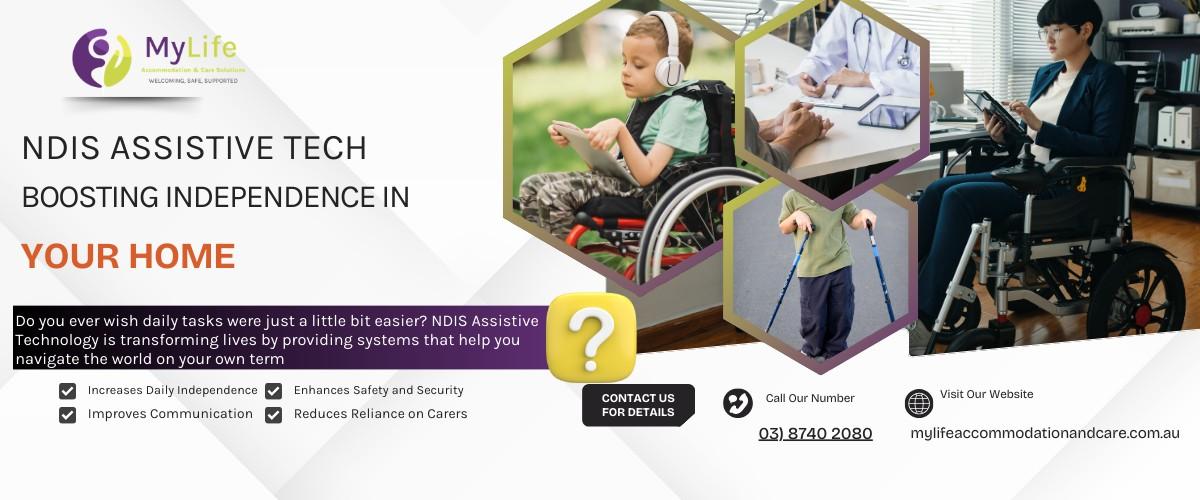
Today, many people use technology, equipment, and devices to assist with their daily tasks. Let’s consider Daniel, an NDIS participant, who relocated to Melbourne and found it challenging to manage his daily tasks independently. Even simple tasks like showering, cooking, and moving around the house became a challenge for Daniel. But Daniel’s life was transformed when he got the right NDIS Assistive Technology (AT) added to his NDIS plan. Daniel got the right assistive technology. He also had the freedom he always wanted. Many NDIS participants in Australia can now have the right to access Assistive Technology. This has changed their daily lives.
This blog will help you understand NDIS Assistive Technology. You’ll learn what NDIS AT includes, the funding in your NDIS plan, and how to access it. You’ll get a clear guide on assistive technology options: low-cost, mid-cost, and high-cost. It will cover funding rules, risk levels, and information on repairs and replacements.
Contents
What Is NDIS Assistive Technology?
It is defined as any equipment, device, item, or system that helps you do something you can’t do, or can’t do safely or easily, because of your disability. NDIS AT must be directly related to your disability. It should help you pursue your goals. It should also decrease the amount of other support you need over time. It should be safe and offer good value. This means it should be reasonable and necessary as per NDIS requirements. NDIS AT can range from basic off the shelf devices to complex, personalized devices.
Assistive Technology Funded by NDIS
The NDIS makes decisions, including assistive technology in your plan, based on an individual’s needs. The cost of assistive technology is based on three cost categories:
1. Low-cost assistive technology (items under $1,500)
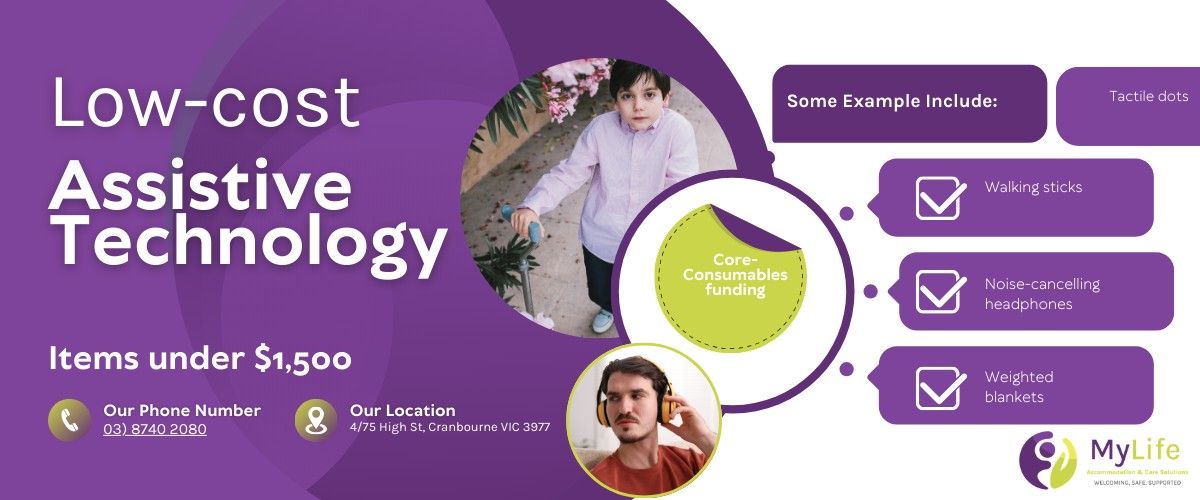
These are the items that you can easily pick off the shelf, which require little setup and pose a low level of risk. Generally, these items will be covered under the Core-Consumables funding, these items cost less than $1500. Most low-cost AT does not require an assessment, but written advice from a therapist may still be needed for most items.
Some examples of this assistive technology that you may find under this level include:
- Non-slip bath mats
- Shower stools
- Walking sticks
- Modified cutlery
- Large print labels
- Portable ramps
- Basic shower chairs
- Shoe horn
- Kitchen utensils
- Kettle tippers
- Tactile dots
- Noise-cancelling headphones
- Weighted blankets
Almost all low-cost devices are quite capable of raising one’s independence in daily activities and are, at the same time, very safe.
To purchase low-cost AT, you will need a recommendation from a treating therapist. If you are self-managed, you will purchase the items yourself and then claim the cost through the NDIS portal. If you are plan managed, you will need to contact your plan manager to verify the process they wish to use for purchasing the AT. If you are agency-managed, you will need to utilise the NDIS PROVIDER FINDER to find an assistive technology provider to purchase the items through.
It is essential to note that even low-cost AT requires written advice if they are higher risk, for example, bed poles and weighted blankets.
2. Mid-cost assistive technology (items that range between $1500 to $ 15,000)
These items require written advice from an assistive technology advisor, and some may also require professional setup. The items are often funded under the Capital – Assistive Technology budget category. The items may include:
- A wheeled shower commode
- A standing hoist
- Pressure care mattresses
- Some types of power wheelchairs
- Alternative communication aids
- Ankle-foot orthotics.
3. High-cost assistive technology (items over $15,000)
These are items that are complex and require individual formal assessment by a qualified Assistive Technology assessor, typically an Occupational Therapist, to ensure it is the right solution for your needs.
They also need specialized tools and knowledge to be set up, and may be custom-made for your individual needs. You will need a quote so that the NDIS can approve the appropriate level of funding in your plan.
These items may also be located under the Capital section of your plan. This section may indicate the specific type of assistive technology you need to procure, or it may also state “quote required.” Your plan will then indicate what follows. Some examples of these items include:
- Customized wheelchairs
- Complex communication devices
- Prosthetics
- Ventilators
- Vehicle modifications
Low Risk Vs Higher Risk Assistive Technology
The level of risk is separate from price. Some low-cost AT have higher risks.
Low-risk assistive technology items are products that are safe for use in daily life. They require very little setup or advice from AT advisors. Examples include shower chairs, adaptive utensils, handrails, large print labels, etc.
Higher-risk assistive technology, on the other hand, requires professional guidance for safe use. Some items regulated by the Therapeutic Goods Administration in Australia are considered higher risk and require professional advice and training before purchase. Some examples of these items include:
- Bed poles and transfer aids
- Weighted blankets and bed rails
- Pressure care devices
- Adjustable beds
- Mobility and postural supports
- Powered devices for hearing or magnification
- Motor vehicle adaptations
- Prosthetics
For higher-risk assistive technology in NDIS, written advice is required before purchase.
Are tablets, Computers and smart devices funded?
The NDIS does not fund general-purpose tablets or computers as they are day-to-day items.
Nonetheless, funding may be available for these items if:
- The item is necessary specifically because of the disability.
- There is written advice that confirms the item is the most suitable solution.
- The item meets the funding criteria
Evidence is required from an assistive technology advisor.
Can I rent or trial the assistive technology?
Yes, there are several options that the NDIS can fund. It may fund short-term trials, rental equipment, and temporary supports after discharge from the hospital. The NDIS can also fund equipment while awaiting permanent supports.
Rental funding is often under the Capital Assistive Technology budget category. This is especially important in Melbourne because there are suppliers that provide short-term rental support.
Funding for Assessments, Setup, and Repairs
Many participants are unaware that NDIS funding can also cover associated costs. The NDIS may provide Capacity Building funding for advice and assessments. It may also provide funding for delivery and setup, trials, and annual repairs and maintenance. Likewise, it may fund replacements if equipment is deemed unsafe, broken, or no longer suitable. Small repairs such as tyre punctures are funded through Core Consumables, while major repairs such as regular service are funded through Capital Assistive Technology. It is essential to note that small repairs for agency-managed participants are also found in Capital Assistive Technology.
Replacement of Assistive Technology
There may be situations where you need to replace assistive technology, and this could happen in the following circumstances:
- If it’s unsafe
- If it’s impossible to repair it
- A child has outgrown it
- There has been a change in your condition
- It’s constantly breaking down
If the cost of the replacement is less than $15,000, you need to obtain written advice, and for replacements costing more than $15,000, you need to obtain an updated assessment and a new quote.
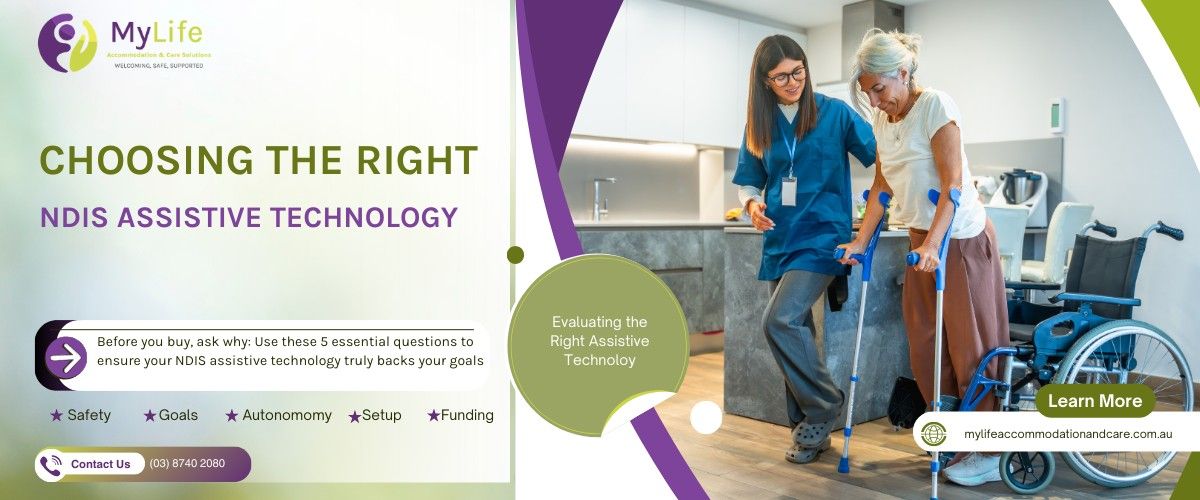
Choosing the Right NDIS Assistive Technology
Before you invest in assistive technology, ask yourself and your care team these questions:
- Is it safe for me to use?
- Will the item assist me in achieving my independence goals?
- Does it connect directly with my disability?
- Would the item be covered by NDIS Assistive Technology funding?
- Could renting be a better choice?
It is always good to consult an occupational therapist or AT advisor to ensure that the technology you are looking at aligns with your disability requirements and functional impairments. If you buy the wrong item without advice, replacement may be rejected
Conclusion
Technology is changing the way Australian NDIS participants live at home. A smart choice of NDIS assistive technology can boost independence. It helps reduce reliance on outside support and makes the home safer and more inviting. Assistive technology, when chosen wisely and guided by professionals, can lower support costs. It also boosts confidence when aligned with your goals. Independence rarely happens overnight. However, with the right tools and guidance in hand, you can achieve it.
My Life Accommodation & Care Solutions uses a combination of visual content sourced through Canva Enterprise, photographs owned by My Life Accommodation & Care Solutions, and AI‑generated images created for illustrative and educational purposes