

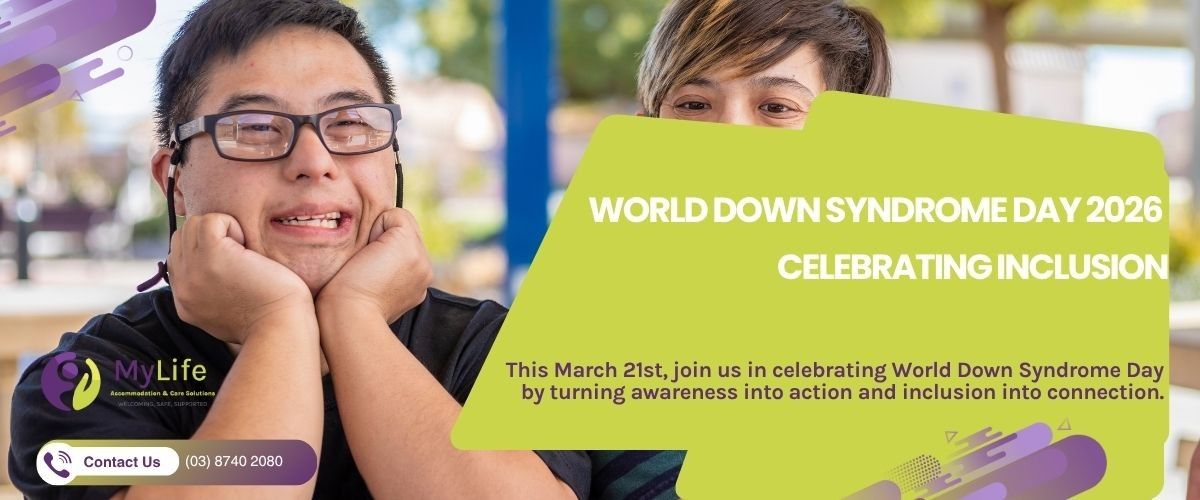
On March 21st, the world will observe World Down Syndrome Day to raise awareness of Down Syndrome and promote acceptance and inclusion. This year’s theme, “Together Against Loneliness,” highlights a reality that is sometimes overlooked but deeply felt.
For many people, life moves quickly most days,we rush to meetings, respond to emails, and check off countless tasks. Amidst all this, it’s easy to forget an important part of being human: the need to feel connected.
For many of us, forming connections comes naturally, whether from family, friends, coworkers, or groups we join. However, too often, many people with Down syndrome do not experience that sense of belonging. Often, their ability to participate is not the problem; rather, it is the lack of opportunities for full inclusion in meaningful experiences.
This year’s theme encourages families, health care professionals, educators, and society as a whole to ensure those with Down syndrome are noticed, engaged with others, and have access to help and support. The theme aims to raise awareness in our community and advocate for equal access for everyone.
Understanding Down Syndrome
Down syndrome, also referred to as Trisomy 21, occurs when there is an extra chromosome (chromosome number 21) present within the affected individual’s genetic makeup. This is found in approximately 1 in 700 births.
An individual who has been diagnosed with Down syndrome will have 3 copies of chromosome number 21 instead of having a pair. This is why World Down Syndrome Day is celebrated on the 21st day of the 3rd month.
The presence of the extra 21st chromosome can cause changes to the way that the brain and body develop. This can lead to the presence of some degree of intellectual disability and certain physical features associated with Down syndrome.
Nonetheless, Down Syndrome does not define an individual’s abilities or potential. They can still accomplish anything within the scope of a normal life, including education, employment, sports, hobbies, and self-improvement, as contributing members of their communities.
Their abilities are not shaped by the obstacles in the condition itself, but rather by the quality of support they receive and the environment around them. When provided with adequate supporting resources in their environment, such as community services programs, people with Down syndrome can succeed.
Living with Down Syndrome: Lifestyle, Care, and Support
Some people living with Down syndrome may experience certain health challenges, such as congenital heart defects, hearing or vision problems, an underactive thyroid, and developmental delays. Therefore, individuals with Down syndrome need to receive quality early medical care and ongoing health monitoring.
Equally important are early intervention programs, which may include speech, occupational, and physical therapy. These services help children develop communication, independence, and mobility skills. Inclusive education settings are also very beneficial, as they allow children with Down syndrome to learn from their peers, build self-esteem and confidence, and form friendships.
As individuals with Down syndrome age, access to employment opportunities, community participation, and independent living becomes crucial for their quality of life. Therefore, we must advocate for disability rights and workplace inclusion to reduce these barriers and combat the loneliness that comes with seclusion..
The quality of life and successful livelihoods of people with Down syndrome are no only influenced by the healthcare and support they receive but also by how society includes people with disabilities in their communities.
Inclusion as a Path to Connection
Loneliness is not about being physically isolated. Sometimes a person can feel lonely even when others are around. This emptiness usually stems from being excluded or unnoticed in everyday settings.
Inclusion commences with the acknowledgement that everyone has the right to participate equally in the community in which they live. When organisations actively remove barriers to participation, they maximise the potential of people living with Down syndrome to develop friendships, access educational opportunities, and demonstrate their abilities through their talents.
Inclusive practices can exist in a variety of ways, including:
- Inclusive education, whereby students with Down syndrome have the opportunity to learn with their peers
- Accessible work environments in which people are valued for what they can contribute rather than being excluded based on their limitations
- Community programs and social spaces that are welcoming of people with all abilities and help to improve society.
These simple practices can help individuals develop confidence and independence while fostering a sense of belonging within their communities.
Inclusion can be initiated with a small gesture. On World Down Syndrome Day, many people around the world wear brightly coloured or mismatched socks to initiate conversations about Down syndrome and show support for all types of diversity. While a simple action, it can spark conversation and raise awareness about Down syndrome in the workplace, schools, and the community.
Most importantly, it reminds us that differences should be recognised and appreciatedrather than overlooked or disparaged.
Moving Forward, Together
This year’s theme, “Together Against Loneliness,” is quite clear and powerful: we build connections by being open to connections ourselves.
Building an inclusive society isn’t a quick process; it requires a long term commitment through our daily actions. We can achieve this by inviting someone into discussions, creating access to various opportunities, and emphasizing the value of each person in our community.
World Down Syndrome Day encourages us to take time to reflect on how we can fulfil the vision of Together Against Loneliness. We can achieve this by building understanding, fostering inclusion, and cultivating empathy; thereby, creating inclusive communities where people living with Down syndrome and all other individuals experience a genuine sense of belonging.
Therefore, when we stand together as one to create inclusive spaces throughout our communities, we will ultimately eliminate loneliness.