

Can You Change Your NDIS Support Coordinator?
So, can you change your NDIS support coordinator? Yes. You can change your support coordination provider at any time, provided you follow the notice requirements in your service agreement. You do not have to wait for your next NDIS plan reassessment.
Wanting a different coordinator does not mean you are being difficult. It means you want support that reflects your needs, respects your choices and helps you work towards your goals.
Contents
What Should an NDIS Support Coordinator Do?
They can also help you understand your plan budget, navigate the my NDIS participant portal (or myplace participant portal) and identify alternative services when an existing arrangement is no longer suitable.
Importantly, a support coordinator should not make decisions on your behalf. Their responsibility is to provide clear information, explain your options and help you build the confidence and skills to coordinate your own supports.
The NDIS recognises three levels of support coordination:
- Level 1 – Support Connection: Helps you understand your plan and connect with community, mainstream and funded supports.
- Level 2 – Support Coordination (Coordination of Supports): Helps you organise and manage a mix of supports, build independence and work towards your goals.
- Level 3 – Specialist Support Coordination: Provides a higher level of support for people experiencing complex situations or significant barriers to accessing services.
Support coordinators also have a different role from plan managers. A plan manager handles the financial administration of your NDIS funding, including processing invoices and tracking expenditure. A support coordinator helps you put your plan into practice. You can have both services funded in your plan.
5 Signs It’s Time to Change Your NDIS Support Coordinator
1. You Are Always the One Following Up
Reliable communication is a core part of support coordination. You should know how to reach your coordinator, when to expect a response, and what is happening with the supports being arranged. If you regularly have to chase basic updates, it may be worth reconsidering whether the current arrangement is meeting your needs.
2. You Do Not Feel Listened To
Your NDIS plan should reflect your goals and individual circumstances. A support coordinator should listen, explain available options, and involve you in every decision. If you regularly feel rushed, dismissed or excluded from conversations about your own supports, the working relationship may no longer be right.
3. Your Supports Are Not Progressing
Delays can happen for genuine reasons, including provider availability, waiting lists, and changes in circumstances. However, your coordinator should communicate these challenges clearly and help explore alternative options. Unspent NDIS funding does not automatically mean your coordinator has failed. What matters is whether there is a clear plan for accessing the supports you need and working towards your goals.
4. Problems Are Only Addressed When They Become Urgent
Unexpected situations, such as a hospital admission, a change of address, or a sudden withdrawal of services, can require immediate attention. However, if every routine task turns into a last-minute crisis, you may benefit from a more proactive approach.
5. You Are Not Given Clear Choices About Providers
Some organisations deliver multiple NDIS services, which can create potential conflicts of interest. This does not automatically make their services inappropriate. However, any financial or organisational relationships should be disclosed, and your right to choose independent providers must always be respected. If you feel pressured to use specific services or are not given clear information about alternatives, it is reasonable to look elsewhere
Should You Talk to Your Current Coordinator First?
For example, you could request more regular progress updates, agree on a set communication schedule or discuss how outstanding support arrangements will be addressed. You can involve a trusted family member, friend, advocate or your my NDIS contact if you would like support during that conversation.
If you feel unsafe raising concerns directly, or you are unhappy with how you have been treated, you can contact the NDIS Quality and Safeguards Commission on 1800 035 544 for guidance or to lodge a complaint.
How to Change Your NDIS Support Coordinator
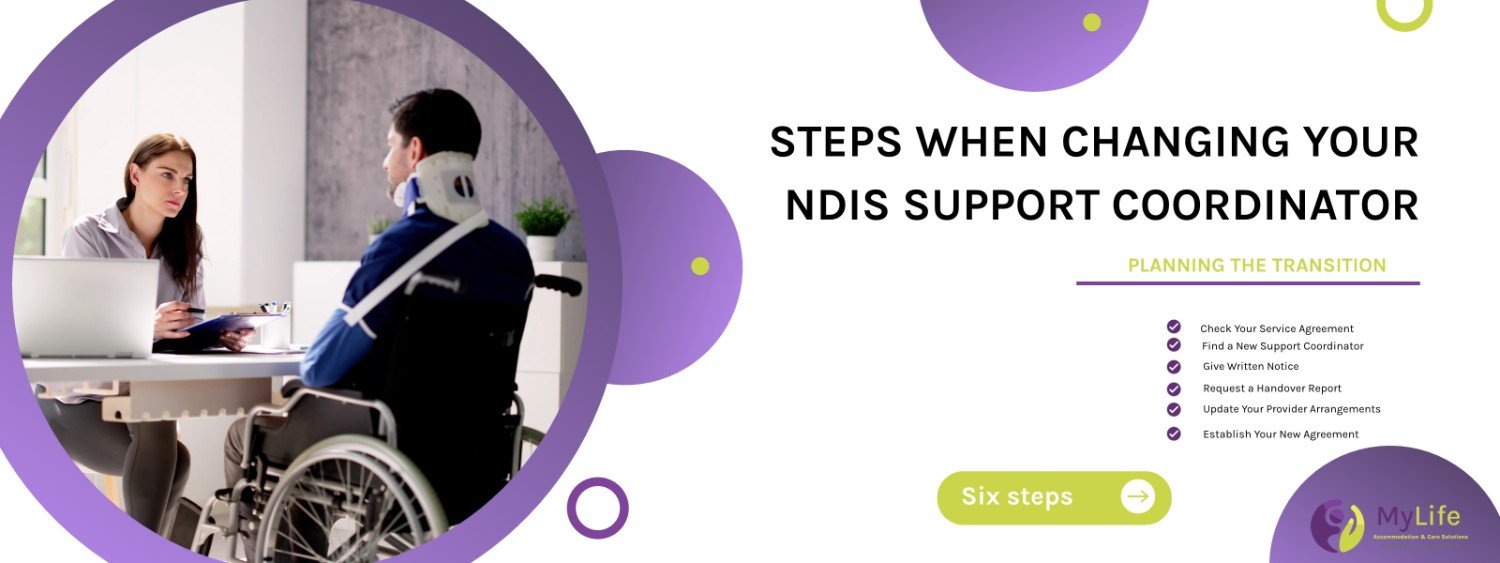
1. Check Your Service Agreement: Review your current agreement to check the required notice period and any cancellation conditions. You may be charged a cancellation fee if you do not provide the agreed notice and the NDIS Pricing Arrangements and Price Limits allow the charge.
2. Find a New Support Coordinator: Where possible, identify a suitable replacement before ending your current arrangement. You can use the NDIS Provider Finder, speak with your my NDIS contact or ask people you trust for recommendations.
3. Give Written Notice: Contact your current provider to confirm in writing that you want to end the agreement. Follow their cancellation process, keep a copy of your notice, and check whether any final invoices need to be settled.
4. Request a Handover Report: Ask your outgoing coordinator to prepare a handover report covering your current supports, progress towards your goals, outstanding tasks, upcoming reassessments and any identified barriers or risks. NDIA guidance states that outgoing coordinators should prepare a handover report as part of the transition process, and relevant provider reports should be shared with your consent.
5. Update Your Provider Arrangements: Confirm with your outgoing coordinator whether they will end the existing service booking in the myplace portal or the my provider relationship in the my NDIS participant portal. If you have a plan manager, let them know about the change. You can also call the NDIS on 1800 800 110 if you need help updating your portal records.
6. Establish Your New Agreement: Once you have selected your new coordinator, discuss your needs, goals, and communication preferences. Agree on the supports to be delivered and put the new service agreement in writing so both parties have clear expectations from day one.
How to Choose the Right NDIS Support Coordinator
- What experience do you have supporting participants with similar needs?
- How do you communicate with participants and provide regular progress updates?
- How do you identify suitable providers and present unbiased options?
- Do you have any organisational or financial relationships with other NDIS providers, and how do you manage conflicts of interest?
- How will you help me build the confidence to manage my supports independently?
Local knowledge also makes a difference. A coordinator familiar with your area will have a stronger grasp of local providers, community networks, and current waiting lists.
If your NDIS funding is NDIA-managed, you must use a registered NDIS provider for support coordination. If you self-manage or use a registered plan manager, you can choose between registered and unregistered support coordinators.
What If You Have a Psychosocial Recovery Coach?

Recovery coaches provide specialised, recovery-oriented support to help you manage the day-to-day impacts of psychosocial disability, build resilience and work towards your personal goals. They can assist with establishing daily routines, strengthening support networks and connecting with clinical and community services. If you are unsure which support best suits your plan, speak with your My NDIS contact.
Frequently Asked Questions
Do I need a reason to change my NDIS support coordinator?
Will changing support coordinators affect my NDIS funding?
How long does it take to change support coordinators?
Can I change my support coordinator before my plan reassessment?
Take the Next Step
To learn more about My Life Accommodation and Care Solutions and how our team can support you, call us directly on (03) 8740 2080.