

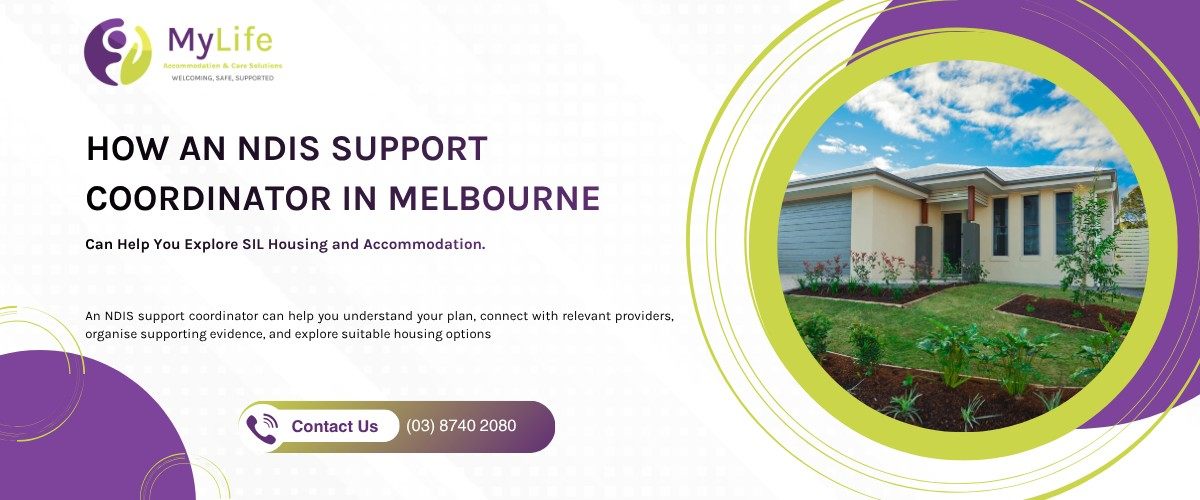
Where you live and the support you receive can affect your daily routine, independence, and wellbeing. If you need regular assistance or supervision at home, Supported Independent Living (SIL) may be an option to explore through the National Disability Insurance Scheme (NDIS).
A SIL request may involve functional assessments, reports from health professionals, and discussions about your future living arrangements. Understanding the available options and coordinating these steps can feel overwhelming.
An NDIS support coordinator in Melbourne can help you understand your plan, connect with relevant providers, organise supporting evidence, and explore suitable housing options. While the NDIA makes the funding decision, a support coordinator can help you prepare and navigate the process.
Contents
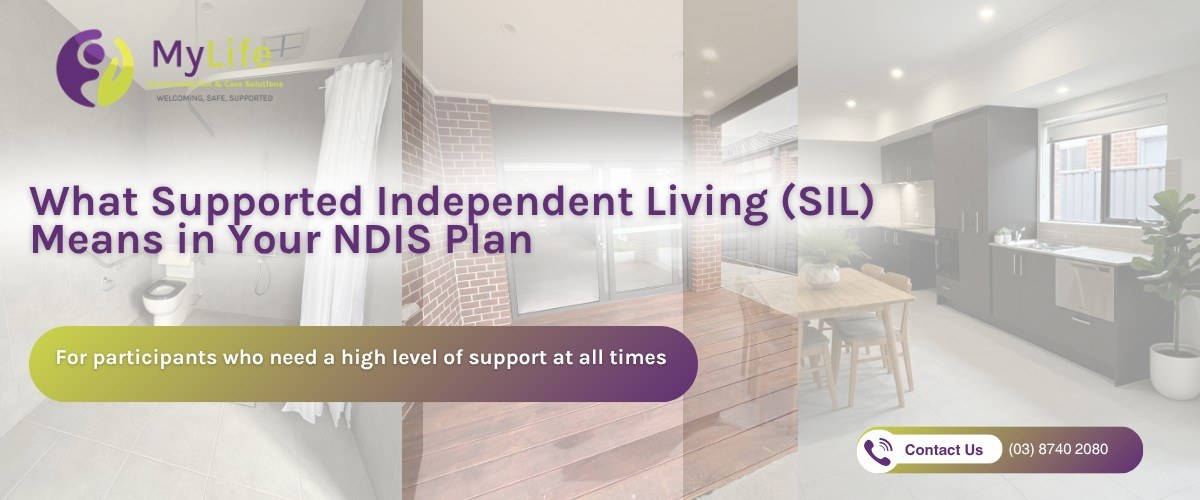
What Supported Independent Living (SIL) Means in Your NDIS Plan
SIL allocates funding for support workers who assist NDIS participants with everyday tasks at home. It is designed for participants who need a high level of support at all times. According to the NDIS, SIL may suit NDIS participants with higher support needs who require regular assistance or supervision with daily activities at home. The NDIA considers each person’s circumstances and evidence when assessing their home and living support needs.
SIL can include help with personal care, meal preparation, household cleaning and washing, medication management and routines, and building skills to increase your independence over time. The support you receive depends on your circumstances and assessed needs.
SIL is not intended for people who need support for only a few hours a day or a few times a week. In those situations, other supports in your plan, such as assistance with daily life, may be more suitable.
SIL funding pays for support services, not the home itself. You remain responsible for rent, groceries, utilities, and other everyday living costs.
Understanding Your Home and Living Options
The NDIS offers several home and living support options. Knowing what each one covers makes it easier to discuss your options with your coordinator and your NDIS planner.
- Supported Independent Living (SIL): funding for support workers to assist with or supervise daily tasks at home.
- Specialist Disability Accommodation (SDA): funding for specialist housing built for participants with extreme functional impairment or very high support needs.
- Individualised Living Options (ILO): a flexible package of supports designed around your preferences, such as living with a host, sharing with housemates or living
- Mainstream housing: public, community, or private rental housing, combined with NDIS-funded support services.
What an NDIS Support Coordinator Does
A support coordinator helps you put your NDIS plan into action. They explain how your funding can be used, connect you with providers, and help you work towards your goals. The NDIS notes that participants with SIL funding in their plan may also be eligible for support coordination funding.
When housing is a priority, your support coordinator can:
- Clarify your housing goals and preferences.
- Explain the NDIS home and living options and how each one applies to you.
- Arrange functional assessments and track required allied health
- Introduce you to registered SIL providers in Melbourne matching your needs.
- Negotiate with SIL providers regarding the supports they can deliver within your plan budget.
- Coordinate meetings with service providers and allied health professionals.
- Assist during your move and review your supports once settled.
How a Support Coordinator Helps You Explore SIL Funding
Setting Clear Housing Goals
The NDIA assesses whether requested supports meet ‘reasonable and necessary’criteria. Clear, specific goals help the NDIA understand your aspirations.
For example, ‘I want to move out of my family home and live with two housemates in Casey, with support available overnight’ gives the NDIA clear context, whereas ‘I want more independence’ is too vague. Your coordinator helps articulate goals to reflect your true choices.
Organising Assessments and Evidence
The NDIA uses evidence to evaluate how your disability affects daily living. Current, consistent, and specific reports give your request the best chance of accurate assessment. Depending on your circumstances, evidence may include:
- An occupational therapy (OT) Functional capacity assessment.
- Allied health reports, such as speech pathology or physiotherapy reports.
- A behaviour support plan, if applicable
- Comprehensive medical reports from your GP or specialists.
- A summary of current supports and identified
- An optional Roster of care from a SIL provider outlining proposed support delivery.
Comparing SIL, SDA and Other Options
Choosing the right option starts with separating housing requirements from support requirements. One participant may need daily support in standard housing, while another requires accessible housing (SDA). Your coordinator explains these differences in plain language, so you can focus your evidence effectively.
Finding SIL Providers in Melbourne
Melbourne offers diverse SIL providers with differing property types, staffing models and support styles. Your coordinator can help you evaluate providers based on:
Experience supporting participants with similar needs.
Location, property accessibility, and current vacancy status.
Compatibility with prospective housemates.
Staffing ratios and continuity of support workers.
Pricing alignment with NDIS Price Limit
Registration status with the NDIS Quality and Safeguards Commission.
NDIS registration. Since 1 July 2026, mandatory registration requirements apply to providers delivering Supported Independent Living. Eligible providers that were already delivering SIL and submitted a valid application by 1 October 2026 may continue delivering supports while their application is assessed, subject to the transitional arrangements. Before choosing a provider, check their current registration status with the NDIS Quality and Safeguards Commission.
Reviewing a Roster of Care
Some SIL providers prepare a roster of care, which sets out the supports they propose to deliver across a typical week, such as personal care, overnight support, community access and household tasks. However, a roster of care is optional. It can help you and a provider outline the support you may need across a typical week, but the NDIA does not require you to submit one as a standard requirement for a SIL request.”
Keeping the NDIA Process on Track
A housing request can involve you, your family, support workers, allied health professionals, SIL providers, housing services and the NDIA. Your coordinator helps keep everyone informed and working together. This can include:
- Preparing you for planning meetings and plan reassessments.
- Checking that documents are complete and submitted on time.
- Following up on outstanding reports and responses.
- Explaining NDIA decisions and what they mean for you.
- Reviewing your supports if your circumstances change.
How a Support Coordinator Helps With Housing
SIL funding is only one part of finding a home. You may also need to find a suitable property, apply for a rental or plan a relocation. In Victoria, your coordinator can help you explore private rentals and SDA vacancies, and look into applying to the Victorian Housing Register for public and community housing.
Preparing for the Move
Once you have chosen an arrangement, your coordinator can help with the practical steps, depending on your needs and plan funding:
- Arranging support workers for moving day.
- Establishing routines for meals, medication, personal care and household tasks.
- Connecting you with local community services and activities.
- Checking that your providers deliver what was agreed.
- Following up once you have settled in.
What to Expect: Realistic Timelines
Securing SIL and moving into a new home takes time. Gathering allied health reports can take several weeks, particularly if occupational therapists have waitlists. Finding suitable housing and compatible housemates also requires thorough consideration.
Involving a support coordinator early keeps documentation moving smoothly. While it won’t alter NDIA processing speeds, it ensures you are supported through every phase.
When to Ask About Support Coordination
If housing is a goal in your plan and support coordination is not yet funded, speak with your Local Area Coordinator (LAC). Your LAC cannot add funding to your plan, but they can help you prepare a request for a plan variation or a plan reassessment. The NDIA then decides whether support coordination is reasonable and necessary. Support coordination may be particularly helpful if you:
- Want to move out of the family home.
- Need help understanding SIL, SDA or ILO.
- Are preparing for a plan reassessment.
- Need evidence to support a home and living request.
- Want to compare SIL providers.
- Have several services to coordinate at once.
Questions to Ask an NDIS Support Coordinator in Melbourne
A good coordinator will welcome your questions. Consider asking:
- What experience do you have coordinating SIL and housing supports?
- How will you help me compare SIL, SDA and ILO?
- How will you find providers that suit me?
- What evidence might I need for my housing goals?
- How will you keep me involved in decisions about where I live?
- How will we review my supports if my needs change?
Frequently Asked Questions
Does an NDIS Support Coordinator Find Me a House?
Not directly. Support coordinators do not own or allocate properties. Instead, they help clarify your goals, explore SIL pathways, gather evidence, connect you with housing providers, and guide you through the transition.
Does SIL Pay My Rent?
No. SIL funds support services at home, not accommodation costs. Rent, board, food, and utility expenses remain your responsibility. (Participants in SDA pay a Reasonable Rent Contribution).
Can I Receive SIL While Living Alone?
Yes. The NDIS provides SIL funding for single-occupancy or shared living arrangements, depending on your assessed support needs and reasonable/necessary criteria.
Do I Need SIL Funding in My Plan First?
Yes. SIL funding must be approved in your NDIS plan before a provider can deliver funded SIL supports. If it is not currently included, your coordinator or Local Area Coordinator (LAC) can assist in submitting a Home and Living supports request.
How Do I Get Support Coordination Funding?
Support coordination is funded as a capacity-building support in your NDIS plan, and participants with SIL funding may have it included. If your plan does not include it, your LAC can help you prepare a request for the NDIA to consider. Only the NDIA can approve changes to your funding.
Finding the Right SIL and Housing Support

The right home and support network empower your independence and long-term wellbeing.
My Life Accommodation and Care Solutions is a registered NDIS provider delivering Supported Independent Living (SIL), Specialist Disability Accommodation (SDA), Short Term Accommodation (STA), and Medium Term Accommodation (MTA) across Casey, Cardinia and South Gippsland.
We offer 24/7 SIL support tailored to private 1:1 or shared living arrangements delivered in our purpose-built homes or your existing home.
To discuss SIL vacancies or make a referral, call (03) 8740 2080, email info@mylifeac.com.au or visit our Supported Independent Living page. If you are living with psychosocial disability, our Recovery Oriented Support page explains how we provide NDIS mental health support and recovery coaching.
Looking outside Melbourne? Explore our SIL properties in Gippsland or read our guide to Specialist Disability Accommodation in South Gippsland.