


If you are or someone you care for is currently going through the NDIS process, then you may have heard the terms Supported Independent Living (SIL), Individualised Living Options (ILO), and Specialist Disability Accommodation (SDA).
You may even ask yourself, ‘What do these terms mean?’ ‘Which option is right for me?’
You are not alone. Many participants and their families in Melbourne often experience confusion about these service options when first introduced. Hence, choosing the right NDIS support can be overwhelming, especially because these services can overlap, and yet they are not the same.
Worry no more! This guide will help you understand the difference between these supports. It will enable you, your support coordinator, or your family to make informed decisions about where to live and which support fits your needs best.
Contents
NDIS Supported Independent Living (SIL)
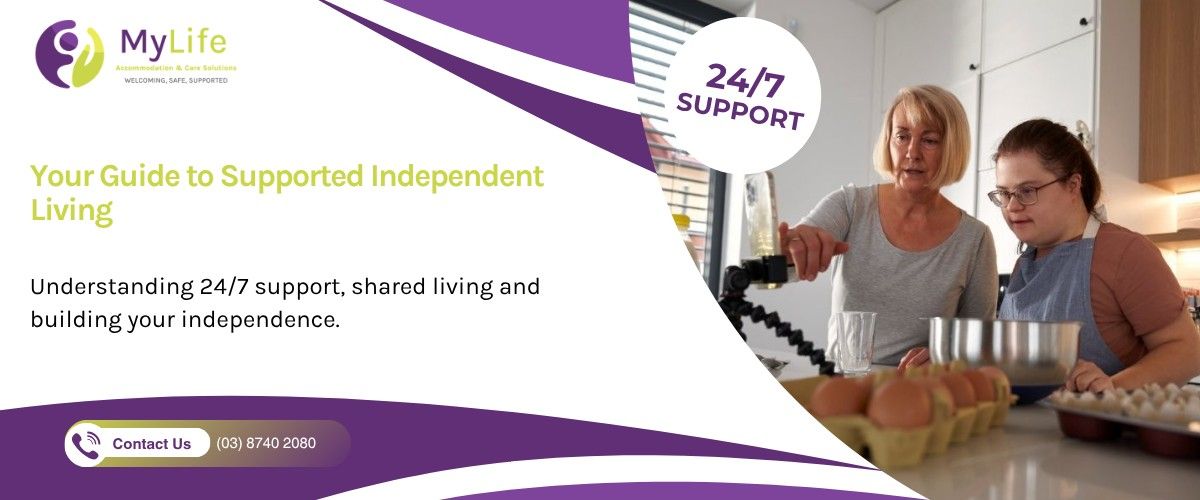
The NDIS Supported Independent Living (SIL) is a structured support designed to assist participants to live independently in the community. In most cases, this community setting is a shared home with other participants.
In addition, SIL provides daily living assistance for participants with higher support needs to enable them to Live independently.
The following types of services Can be provided in the SIL setting:
- Personal care support (assistance with showering/dressing)
- Meal preparation and assistance
- Household tasks, including but not limited to cleaning, laundry, etc.
- These supports are typically delivered on a 24/7 basis
- SIL supports are also delivered in conjunction with allied Health Professionals to foster participant’s home and living skills development.
SIL is appropriate for participants who:
- Require regular support and assistance, and are unable to live independently without paid assistance.
- Enjoy or are comfortable living in the company of other individuals.
- Want to build independence in a structured environment
SIL homes across Melbourne are regularly shared between 2-3 participants, with support provided based on each person’s individual needs.
Individualised Living Options (ILO)?
ILO is a more personalised and flexible living arrangement. Rather than have you move into a group SIL home, ILO is about creating a living arrangement based on your preferences, relationships, and lifestyle.
Here are some examples of ILO arrangements:
- Living with a host family.
- Living with a housemate you choose.
- Living alone with supports suited to you.
- Co-residing (having someone live in your house to provide support to you).
What are the differences between ILO and other living arrangements?
- It’s not a one-size-fits-all.
- The planning and design cost will be covered before implementation.
- ILO gives the individual choice and control over their living arrangements.
ILO is an ideal fit for participants with lower support needs who want to have more customised living arrangements. It is also suitable for participants who do not require full-time (24/7) support and prefer to live with familiar or like-minded individuals.
Although the uptake of ILO in Victoria is increasingly growing, setups can take time as each is custom-designed to meet individual needs.
Specialist Disability Accommodation (SDA)?
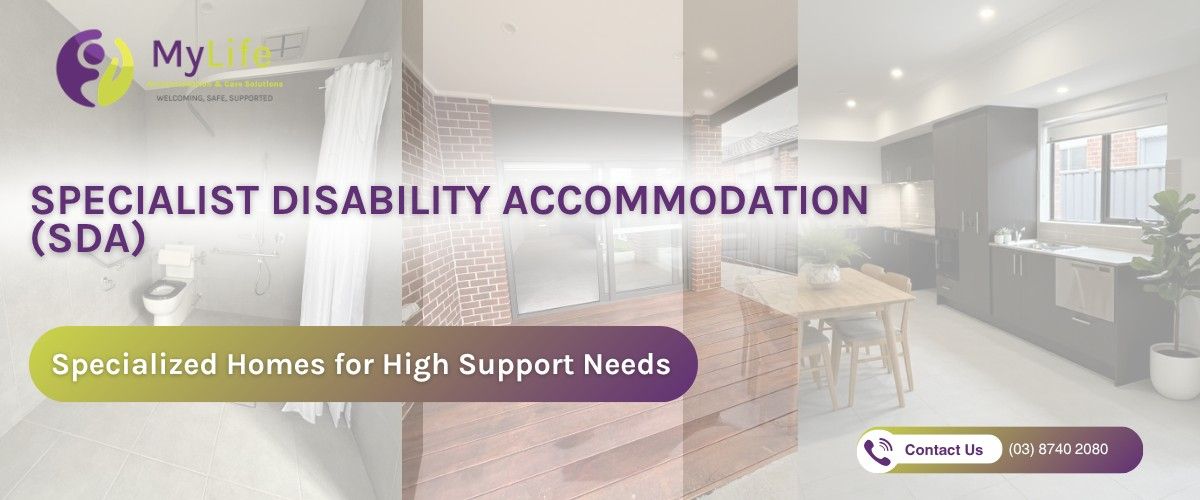
SDA is the cost of the physical accommodation and not the support received. It is designed and funded specially for someone with high functional impairments or with exceptional support needs and requires a building that is purpose-built or has been modified.
Some of the features of an SDA building include:
- wheelchair accessibility
- hoists and assistive technologies
- high level of infrastructure for physical support
- robust housing that can handle complex behaviours
Note: SDA is the building, and SIL is the support provided in the building. You can have: SDA without SIL, SIL without SDA, or both together (common in high-support situations).
Summary of Key Differences
| Feature | SIL | ILO | SDA |
| Description of what is funded | Support services | flexible living arrangements | The physical residence |
| Living arrangements set up | Usually co-shared | Fully customised | Specialist housing |
| Level of support | Generally moderate to high | Flexible | Depends (paired with SIL or other supports) |
| Suitability | Those needing daily support services | Those who need personalised living | Those with high physical needs |
How Do These Work Locally in Melbourne (VIC)?
Now that you understand the definitions, it is equally important to understand how these options function locally.
1. SIL Availability Within Melbourne
- Demand for SIL in Melbourne is high. This is especially true in places such as the Northern and Eastern suburbs. These places have strong services and good infrastructure.
- The process of matching individual participants (in terms of compatibility, support needs, and personality) can take a significant amount of time. Providers prioritize household-first matching rather than just filling a bed.
- Many SIL vacancies might not be publicly advertised. You may need to look for them through provider networks.
2. SDA Housing Reality
- SDA homes are spread across Melbourne. However, some categories are difficult to find because there are few available.
- In Melbourne, high-support homes are more accessible than basic builds. Most new developments focus on high physical support like automation, hoists, and backup power.
- Some participants will wait months (or sometimes longer) for the right vacancy. Even when a property exists, moving in is rarely a fast process due to funding delays, matching and compatibility, or regional imbalance.
3. Timeframes for ILO Setup
- Setting up an ILO will require time for planning and approvals, as well as building relationships.
- The process does not happen instantaneously; however, if undertaken correctly, it will provide long-term sustainability.
Finding the Best Fit
There is no one-size-fits-all answer to this question, but here is a way to think about it.
- Select SIL if you want consistent daily assistance and are open to living with other people.
- Choose ILO if you are looking for flexibility and a more personalised living space.
- Consider SDA if your needs require specialised housing infrastructure.
In many instances, you may require a combination of all three.
Common Mistakes to Avoid
Families in Victoria are continually running into these same problems:
- Assuming SIL covers the cost of housing (it doesn’t — it covers the cost of support)
- Confusing SDA with support funding
- Rushing into the first available vacancy and proceeding without proper accommodation matching
- Not considering ILO as an alternative
Taking the time to investigate all your options can and will provide you with positive long-term results.
Next Steps- What Can You Do Now
If you’re still unsure, use the checklist below to guide you:
- Check your NDIS Plan. What funding do you currently have?
- Know what support needs you require to be able to live independently
- Consider your preferred living style. Is it in a shared home or independent?
- Check for local vacancies in Melbourne
- Investigate whether ILO design funding could apply to you
- Speak to a provider to assess if you would be suitable and what your options are
Need Help Deciding?
Choosing between SIL, ILO, or SDA is not just about funding. It is also about finding the right home and supports that will truly suit your needs.
If you would like assistance in understanding your options and availability in Melbourne, or your eligibility for any of the above:
Book a suitability chat with us, and we will assist you step by step through the process.
My Life Accommodation & Care Solutions uses a combination of visual content sourced through Canva Enterprise, photographs owned by My Life Accommodation & Care Solutions, and AI‑generated images created for illustrative and educational purposes